Your shopping cart is empty!
Mid Century Modern Kitchen Cabinets: The 7 Design Rules Behind the Look
Posted By: Eva Times Read: 2417
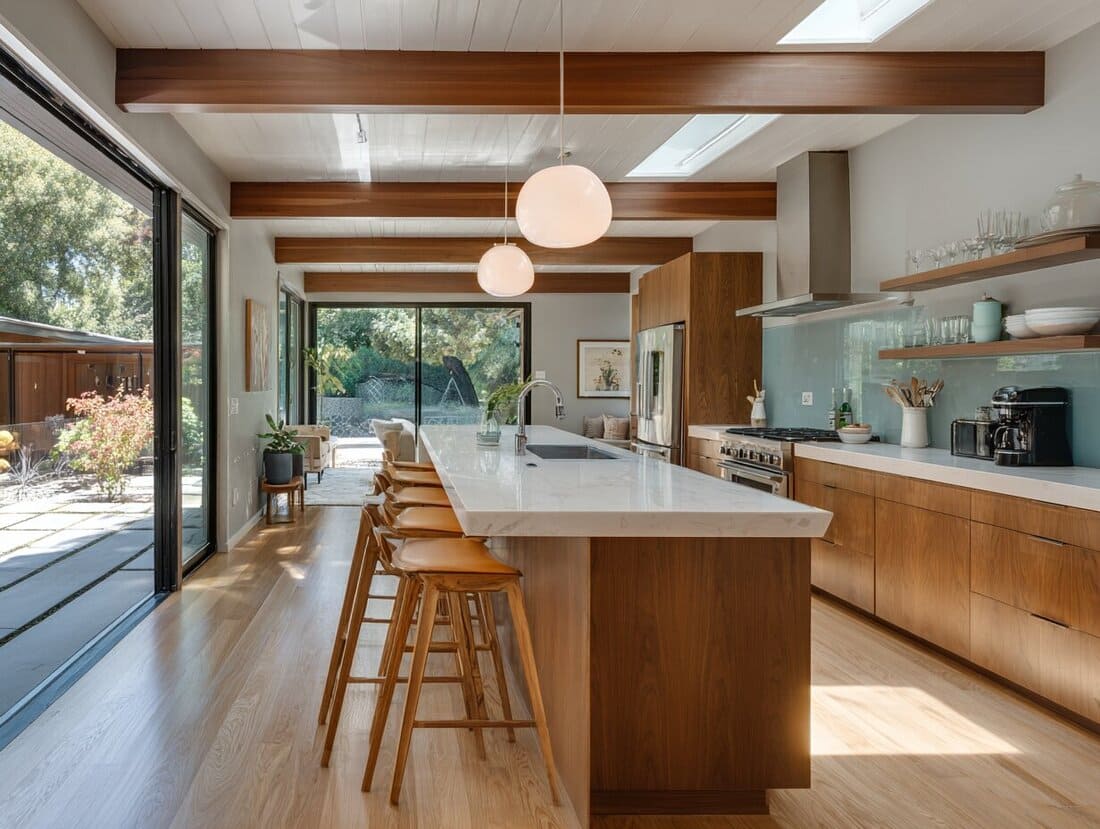
You don't need to be an architecture historian to recognize mid-century modern kitchen cabinets. We’ve all come across this iconic aesthetic, whether in design magazines, movies, TikTok videos, Instagram reels, or simply as part of our everyday surroundings.
Mid-century modern has remained one of the most enduring interior styles for good reason: it solves the tension between warmth and simplicity better than almost any other design language. Trends cycle in and out, but this aesthetic keeps pulling homeowners back, largely because of its clean proportions, functional layouts, and a character that doesn't date.
At Cabinet DIY, many homeowners come to us looking for kitchen cabinets that feel uncluttered, warm, and functional without appearing overly traditional or modern. And mid-century cabinets exactly achieve that balance.
The challenge is that most people recognize the look immediately but can't always pinpoint what creates it. After working through kitchen renovations across a range of budgets and layouts, we've identified the specific design rules that separate authentic mid-century modern cabinetry from a surface-level imitation of it.
What Makes Mid-Century Modern Kitchen Cabinets Instantly Recognizable?
Mid-century modern kitchen cabinets look effortless at first glance, but that simplicity is engineered. Every element, from cabinet door profile to hardware finish to wood grain, is doing deliberate work.
After helping homeowners create kitchens that attract timeless aesthetics, we have found that the following design rules define mid-century modern cabinetry.
1. Prioritize Clean, Uncomplicated Lines
The foundation of mid-century modern kitchen cabinet designs starts with simplicity. Compared to traditional cabinets that come with decorative moldings and ornate detailing, mid-century cabinets have a cleaner appearance. Slab or flat-panel cabinet doors are preferred because they create a sleek flow.
One of the biggest mistakes we see is adding excess decorative elements that compete for attention. The cabinet provides a visual structure while the materials and proportions create the character in mid-century cabinets.
The goal is not minimalism for its own sake. Every element should feel considered, with nothing competing for attention and nothing missing.
2. Let Natural Wood Take Center Stage
Natural wood remains one of the best features of mid-century modern cabinetry. Walnut became especially popular during the original mid-century era because of its rich color and distinctive grain patterns.
White oak has become a strong contemporary alternative; lighter and more neutral in tone, which makes it particularly well-suited to smaller kitchens where walnut's depth can start to feel heavy and closed-in.
Today, many homeowners choose walnut finishes or oak tones that highlight natural texture. In our experience, homeowners underestimate how much warmth wood cabinetry brings to the kitchen. The right wood finish doesn't just look warm; it makes the entire kitchen feel like it was designed to be lived in.
Rather than hiding wood grain beneath heavy stains or glossy finishes, this style celebrates the material itself. The grain patterns become part of the design story. This emphasis on natural materials aligns with one of the core principles of mid-century design: bringing organic elements into every living space.
3. Focus on Function Before Decoration
Mid-century modern design emerged during a period when designers placed enormous value on functionality. Every element served a purpose. And that philosophy remains relevant even today.
We encourage homeowners to think about how they actually want to use their kitchens before selecting decorative features. The storage efficiency, accessibility, and organization can help guide cabinet choices.
This era heavily championed the "kitchen work triangle", the optimized, ergonomic distance between the stove, sink, and refrigerator. When mapping out your cabinet layout, prioritize this geometric flow to ensure the space is as efficient as it is beautiful.
Ready-to-assemble cabinet solutions have become a practical choice for mid-century builds — they offer solid storage options without the visual bulk that can undermine the streamlined look. Most homeowners at this price point are looking for exactly that combination: style, efficient organization, and everyday usability.
A mid-century modern kitchen cabinet should feel genuinely easy to use, not just clean to look at. If a design feature adds visual complexity without improving the overall functionality, then it’s not likely to belong to your kitchen.
4. Embrace Minimal Hardware
Hardware plays a crucial role in achieving a mid-century modern look. Some classic mid-century kitchens feature slim metal pulls, integrated finger pulls, linear bar handles, and minimalist hardware designs. The hardware should complement the cabinet rather than dominate it.
Oversized decorative handles quickly push a kitchen interior away from mid-century style. A simple hardware with clean geometry helps maintain visual consistency throughout the space. For a truly authentic retro touch, consider pairing simple knobs with metal backplates (also known as escutcheons), a hallmark hardware detail of 1950s and 60s cabinetry.
As a general rule: brushed brass reads warmest and pairs best with walnut or honey oak. Matte black works better against lighter wood tones or white finishes; the contrast keeps it grounded without competing. Satin nickel and stainless steel stay the most neutral and transition well across both warm and cool palettes.
5. Balance Warmth with Contrast
One reason mid-century modern kitchen cabinets remain so appealing is their ability to feel warm and sophisticated at the same time. Natural wood cabinets pair beautifully with contrasting elements, including light backsplashes, black fixtures, white countertops, neutral flooring, and subtle geometric accents.
That contrast is what keeps the space from feeling closed-off or monotone.
Many homeowners assume that mid-century cabinet design needs dark cabinets throughout the space. However, successful kitchens use a thoughtful mix of light and dark elements to create a good balance.
Over the years, we have noticed that white and wood combinations have become popular because they maintain a clean aesthetic while preserving the warmth that makes mid-century spaces feel optimistic. White kitchen cabinets continue to be a sought-after choice because they create brightness and complement the widest range of design styles.
6. Keep the Layout Open and Airy
Mid-century modern architecture emphasizes openness and flow. The same should guide cabinet planning. Rather than filling every wall with upper cabinets, many mid-century inspired kitchens use a different approach.
Open-shelving, uncluttered sightlines, and carefully placed storage zones help create a spacious feeling. When discussing kitchen layouts with homeowners, we encourage them to think ahead to maximum storage capacity. While the storage matters, the breathing room matters too.
When a kitchen becomes overly crowded, it can undermine the simplicity of the style.
A practical starting point is to limit upper cabinets to one or two walls and use the remaining space for open shelving or a clean backsplash run. This preserves storage without closing off the sightlines that give mid-century kitchens their character.
7. Invest in Quality Construction
The style attracts attention first, but construction quality determines how well the kitchen performs over time.
Construction quality starts with the box itself. Plywood construction holds screws better and resists moisture more reliably than particleboard, which matters in a kitchen environment. Dovetail drawer joints and soft-close hardware are worth prioritizing because they reflect how a cabinet is built, not just how it looks.
At Cabinet DIY, we remind homeowners that beautiful cabinets should also withstand years of daily use.
Whether you're choosing ready-to-assemble or pre-built cabinetry, construction quality should be non-negotiable. Well-built cabinets hold their alignment, resist daily wear, and maintain the clean lines that mid-century design depends on. RTA options have also become a genuinely competitive choice; they sit at a practical intersection of affordability, appearance, and faster lead times without sacrificing the structural integrity that makes a kitchen last.
It's important to note that a true mid-century modern kitchen is about designing an interior that can work for years to come.
Bringing Mid-Century Modern Kitchen Cabinets Into Your Home
The seven rules above aren't about chasing a look; they're about understanding why the aesthetic works so you can apply it with intention. Mid-century modern design has proven it is far more than a passing trend; it is a lasting architectural philosophy that seamlessly balances organic warmth with everyday practicality. By prioritizing clean lines, rich wood tones, and highly functional layouts, you are investing in a space that will feel just as relevant and inviting a decade from now as it does today.
Whether you're planning a full kitchen renovation from the studs up or selectively updating your cabinetry to refresh the room, these principles give you a clear framework for making decisions that hold up over time.
Comments
Pinterest CabinetDIY
Latest Blog Posts
12
Oct
0
RTA Cabinets Just Arrived? What to Check Before You Start Building
Inspect your DIY kitchen cabinets for shipping damage, missing parts, finish defects, and sizing errors before assembly begins....
22
Sep
0
How to Measure Your Kitchen Before Ordering DIY Cabinets
Learn how to measure your kitchen for DIY cabinets, from walls and windows to appliances and plumbing, before placing your order....
21
Sep
0
Slim Shaker or Regular Shaker? Here's What You're Actually Choosing Between
Slim shaker cabinets have narrower rails and a larger center panel. See how they compare with regular shaker on style, hardware, and kitchen size....
16
Sep
0
What Color Walls Go With Yellow Kitchen Cabinets?
What color walls go with yellow kitchen cabinets? Explore stylish color combinations and practical tips for creating a bright, balanced kitchen....
14
Sep
0
How to Keep Brown Kitchen Cabinets Looking Rich (Cleaning & Care Tips)
Keep brown kitchen cabinets looking rich with practical cleaning, stain removal, and maintenance tips that protect the finish and extend cabinet life....











Best Sellers
Information
My Account