Your shopping cart is empty!
Slim Shaker or Regular Shaker? Here's What You're Actually Choosing Between
Posted By: Eva Times Read: 5
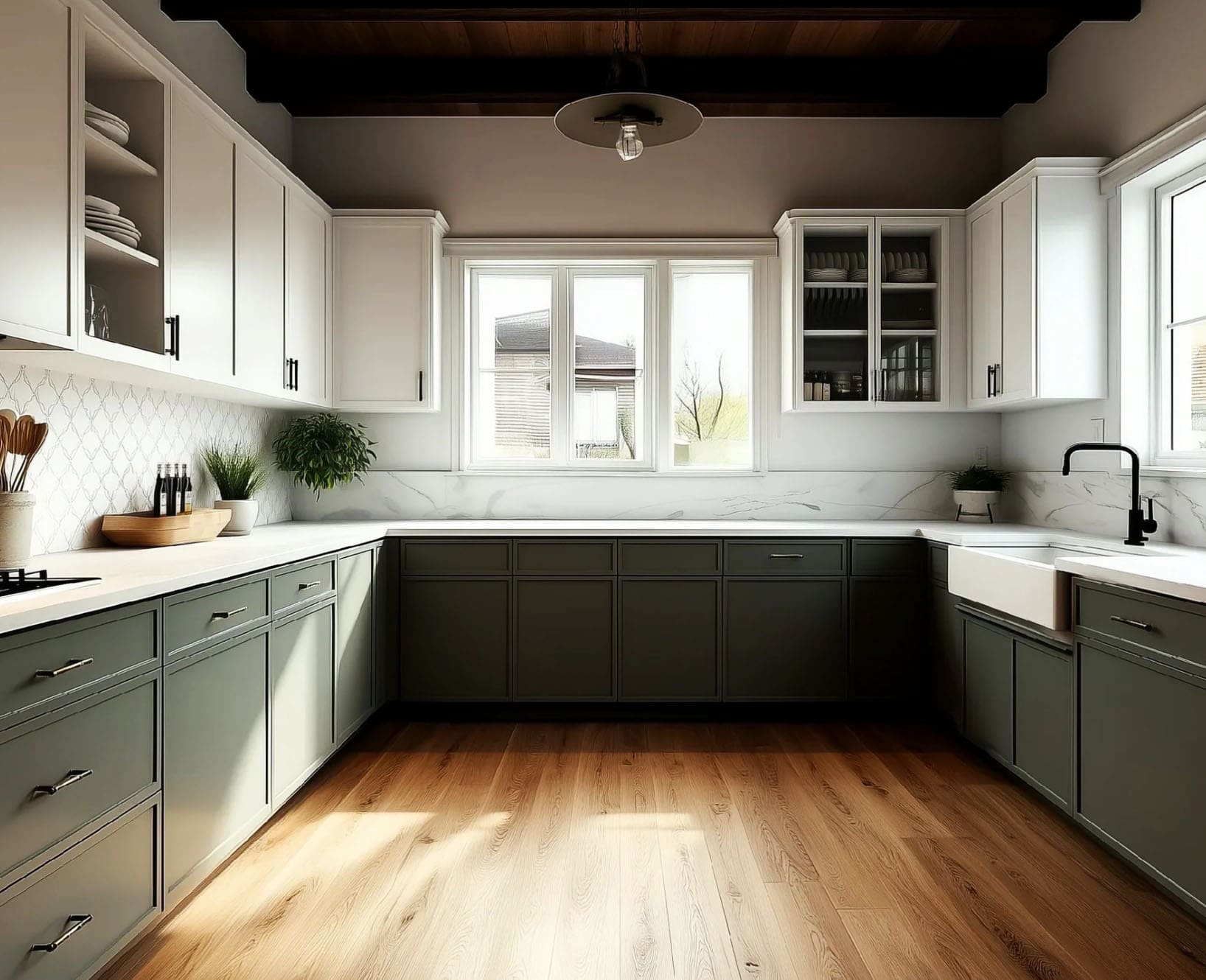
Choosing between slim shaker cabinets and regular ones can look like a small design decision on paper. It isn't. The frame around each cabinet door, and the width of its rails, can change the way an entire kitchen space feels.
Both slim and regular shaker doors share the basic idea: a framed door surrounding a recessed center panel. The difference is the amount of framing you see. A regular shaker uses a wider frame, while a slim shaker uses narrower rails and stiles.
In our experience, homeowners often focus first on color or hardware and then realize that the door profile has just as much influence on the finished room. Here's what you're actually choosing between.
What Makes a Shaker Cabinet “Slim”?
A traditional shaker door comes with two vertical stiles, two horizontal rails, and a recessed center panel. A slim shaker keeps that familiar structure but reduces the width of the surrounding frame.
Manufacturers define the term “slim” in different ways, and the industry has no set standard. Slim rails and stiles usually fall between ½ inch and 1½ inches, although anything under 1 inch is rare. Regular shaker frames typically measure between 2 and 3 inches.
Frames that land between 1½ and 2 inches sit in the middle, and some brands call them slim while others call them standard, so it is worth checking the actual measurement instead of relying on the name.
This change in dimension is easy to notice. The door looks quite different and carries less visual weight. In practice, a slim shaker is the same cabinet style with different proportions.
Slim Shaker vs Regular Shaker: What Actually Changes?
The simplest way to understand the difference is to put the two profiles side by side.
| Design Considerations | Slim Shaker | Regular Shaker |
|---|---|---|
| Rail and stile width | Narrower (about ½ to 1½ inches) | Wider (about 2 to 3 inches) |
| Center panel | More prominent | More contained |
| Visual weight | Lighter | Substantial |
| Overall character | Clean and contemporary | Traditional |
| Hardware that suits it | Bar pulls, finger pulls, edge pulls | Cup pulls, bin pulls, knobs |
Here is a closer look at each difference.
The Visible Frame
Regular shaker doors come with a thicker frame than slim shaker cabinets. The frame gives the cabinetry a more complete look and makes each door stand out.
A slim shaker has a more subtle frame. This means the cabinetry looks less bulky and more elegant, especially across long runs of several doors.
The Center Panel
This is where the main difference shows. With a thinner frame, the center panel takes up more of the door, and the frame reads as a fine outline instead of a border.
On smaller doors, it matters a lot. A thick frame on a regular door can crowd the center panel until it is barely noticeable, while a thinner frame gives it room to show.
Drawer fronts make this obvious. On a shallow drawer, wide rails can leave almost no space for the panel, and slim rails look much tidier there.
The General Style
Regular shakers are best suited to classic designs such as traditional, rustic, and farmhouse kitchens. Slim shaker cabinets fit contemporary, transitional, and modern kitchens because the design is not too bulky.
Neither profile is more durable than the other by default. Rail width is a design choice, and durability comes from the materials and construction. The one exception is very narrow rails on tall doors, which is covered below.
Where Slim Shaker Cabinets Make the Biggest Difference
Slim shaker cabinets make their biggest visual statement in kitchens with a lot of cabinets.
Picture a full kitchen with tall cabinets, a run of base cabinets under the counter, and wall cabinets above. With regular shaker, each door adds a fairly wide outline, and repeating that outline dozens of times creates a strong visual rhythm in the room.
With slim shaker cabinets, that rhythm softens. The doors are still visible, but the overall look is more unified.
That is why slim shaker cabinets work well in small kitchens. They won't increase the actual room space, but narrower frames make the cabinets look less heavy.
We recommend looking at the complete kitchen cabinetry set-up, since it is much easier to judge the difference between profiles across a full layout than on a single door. If you can, hold a sample door of each profile up against your countertop and flooring before deciding.
Hardware, Paint, and Door Size
Hardware changes the result too. Slim shaker pairs naturally with bar pulls, finger pulls, and edge pulls, because the narrow frame leaves room for a clean, simple line.
Regular shaker holds its own next to cup pulls, bin pulls, and knobs, the kind of hardware that suits a heavier frame.
Paint follows the same logic. Slim shaker tends to look crisp in a single solid color such as white, black, or soft gray, where the thin frame reads almost like a shadow line.
Regular shaker suits creamy whites, sage, and navy, and the wider frame gives painted doors a more furniture-like look.
Door size matters as well. Very narrow rails on tall doors, such as pantry or full-height doors, leave less material at the joints, so it is worth asking the manufacturer about construction and the maximum door size for that rail width. Regular rails handle that stress more easily.
Slim shaker works with both full overlay and inset construction. Full overlay is the more common pairing. In an inset kitchen, the door sits inside the cabinet frame and both frames show, so slim rails keep the look from feeling busy.
If you are also considering flat slab doors, slim shaker is the middle ground. It keeps a hint of shaker detail without the visible frame of a regular shaker.
When a Regular Shaker Is the Better Choice
The slim design is not automatically the best choice for every kitchen. A regular shaker is a good option when the kitchen needs traditional proportions or the cabinets need more visual presence.
It pairs well with classic hardware and styling, farmhouse or country influences, and traditional decor. It also suits a larger kitchen, where heavier door frames can visually balance tall walls and large cabinets.
Surrounding architecture is important too. If the kitchen already has traditional elements such as crown molding, beadboard, or a farmhouse sink, regular shaker doors will reinforce them instead of competing with them.
The choice comes down to how well the door fits the room.
Choosing the Right Shaker Style
Go for slim shaker cabinets if you want narrower framing, a more visible center panel, and a smooth transition between classic shaker and a modern look.
Choose regular shaker if you prefer stronger framing, traditional proportions, and bigger cabinets.
Proportion should decide it, and the proportion has to suit the size and style of your kitchen.
The main difference between slim shaker and regular shaker comes down to one detail: the width of the rails and stiles. That one detail changes how much frame you see, how large the center panel looks, and how much visual weight the cabinets carry.
Comments
Pinterest CabinetDIY
Latest Blog Posts
21
Sep
0
Slim Shaker or Regular Shaker? Here's What You're Actually Choosing Between
Slim shaker cabinets have narrower rails and a larger center panel. See how they compare with regular shaker on style, hardware, and kitchen size....
16
Sep
0
What Color Walls Go With Yellow Kitchen Cabinets?
What color walls go with yellow kitchen cabinets? Explore stylish color combinations and practical tips for creating a bright, balanced kitchen....
14
Sep
0
How to Keep Brown Kitchen Cabinets Looking Rich (Cleaning & Care Tips)
Keep brown kitchen cabinets looking rich with practical cleaning, stain removal, and maintenance tips that protect the finish and extend cabinet life....
01
Sep
0
How Kitchen Lighting Changes the Way Cabinet Colors Look
Cabinet colors shift under different lighting. See how natural and artificial light affect white, gray, wood, and brown cabinet finishes before you choose....
23
Aug
0
Black Kitchen Cabinets: How to Choose the Right Style, Finish, and Layout
Explore black kitchen cabinet styles, finishes, pros and cons, and design tips to help you choose the right black cabinets for your kitchen....











Best Sellers
Information
My Account