Your shopping cart is empty!
Black Kitchen Cabinets: How to Choose the Right Style, Finish, and Layout
Posted By: Eva Times Read: 96

Black kitchen cabinets can turn an ordinary kitchen into a space that feels sophisticated, dramatic, and distinctly yours. Black cabinetry anchors a room while still leaving room for nearly any style, from farmhouse warmth to minimalist restraint.
But “going black” isn’t one decision; it’s several. The cabinet style you choose, the finish on the doors, how much natural light your kitchen gets, and what materials surround the cabinetry all shape the final result. At CabinetDIY, we’ve noticed the homeowners happiest with their black kitchens are the ones who worked through these details before ordering, not after.
The Psychology Behind Choosing Black Cabinets
Color shapes mood more than most people expect, and black carries a particular weight. It reads as confident, polished, and deliberate. In a kitchen, that weight is exactly what makes black kitchen cabinets feel designed, not just the safe neutral everyone defaults to.
Contrast does a lot of the work. Set against white quartz, pale walls, warm wood tones, or brushed brass hardware, black cabinets make everything around them pop. That contrast is what gives black kitchens their editorial, magazine-spread quality.
Black also happens to be a true neutral. It won’t fight with future updates the way a trendy color might. Swap the countertops, repaint the walls, or change out the hardware years down the line, and it will still feel intentional.
That doesn’t mean black works everywhere without a plan. In a kitchen with limited natural light, too much of it can tip the room from sophisticated into closed-in. Used with intention, black opens a room up instead of shrinking it, and that’s exactly what the rest of this guide walks through.
Black Kitchen Cabinet Styles Worth Considering
Black Shaker Cabinets
Shaker doors are the reliable go-to in kitchen design, and black doesn’t change that. The clean, recessed panel keeps the door simple, so the black finish does the visual heavy lifting. That makes Black Shaker cabinets one of the safest bets if you’re not fully committed to one design era. They feel just as at home in a modern farmhouse kitchen as they do in a transitional or contemporary one.
Black-Stained RTA Cabinets
If you’re renovating on your own timeline, ready-to-assemble black cabinets deliver the dramatic look without the custom-cabinet price tag or lead time. A stained finish, rather than painted, tends to show more depth and grain variation, which keeps large runs of cabinetry from reading flat or uniform.
Matte Black Cabinets
Matte has become the default choice for a lot of black kitchens, and for good reason. The low-sheen finish feels modern without chasing a trend, and it hides fingerprints and light smudging far better than a glossy door. If your kitchen sees heavy daily use, matte black cabinets are usually the more forgiving option.
Modern Wood + Black Combinations
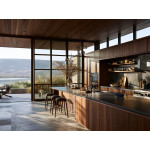
Black cabinets don’t have to mean an all-black kitchen. Pairing black lowers or uppers with natural wood, open shelving, a wood island, or floating wood shelves keeps the space from feeling cold or monochrome. This combination has caught on because it delivers the drama of black without losing the warmth.
Frameless Black Cabinets
For a genuinely sleek, European-inspired look, frameless construction removes the visible face frame of traditional cabinets, so the black finish reads as one continuous surface. Paired with simple pulls or handle-less doors, frameless black cabinets tend to photograph and live, especially well in contemporary kitchens.
Match Black Cabinets to Your Kitchen’s Light and Size
Before falling for a style, take an honest look at your kitchen’s natural light. Large windows and open layouts can absorb a lot of black without feeling heavy. Smaller kitchens, or ones with limited windows, do better with black used more strategically.
A common combination: black on the lower cabinets, lighter cabinets or open shelving up top. That keeps the eye moving upward and stops the room from feeling boxed in, while still giving you the visual impact of black where it shows up most. A black island works the same way, introducing the color as a focal point instead of a full commitment.
Whatever layout you land on, don’t skip the lighting plan. Under-cabinet strips, pendants over the island, and enough overhead fixtures keep a black kitchen feeling bright and usable rather than dim.
What to Pair With Black Cabinets
The materials around your cabinetry do as much to shape the final look as the cabinets themselves:
- Light countertops – Quartz or marble-look surfaces create the sharpest, most classic contrast against black.
- Natural wood accents – Flooring, open shelves, or a wood island soften black’s edges and add warmth.
- Light-colored backsplash – Helps bounce light around the room and keeps the cabinetry from blending into the wall.
- Hardware – Brass or brushed gold reads as intentional and decorative; black hardware creates a more seamless, monolithic look.
You don’t need every surrounding element to be light. Just enough contrast and texture keeps a black kitchen from tipping into visually heavy territory.
Choosing a Surface Finish: Matte vs. Glossy
Matte and glossy black behave very differently in a kitchen that actually gets used. Matte absorbs light and feels understated, and it’s more forgiving of daily fingerprints and smudges. Glossy reflects light for a sleeker, more polished look, but every touch, water spot, and speck of dust shows.
Weigh the two against how the kitchen gets used day to day, not just how it looks in a showroom photo.
Maintenance and Everyday Use
Like any cabinetry, black surfaces need regular upkeep. Grease, cooking residue, and dust don’t discriminate by color; they show up on every kitchen eventually. What changes with black is visibility: light dust and water spots stand out faster than they would on a mid-tone or light cabinet, especially with a glossy finish.
Factor that into your cleaning routine before you order, not after. A busy family kitchen usually does better with matte; a lower-traffic or design-forward space can handle the extra upkeep glossy black asks for.
Black Cabinets: Pros and Cons
Pros
- Sophisticated, high-impact look
- Versatile across design styles: farmhouse, modern, transitional, minimalist
- Creates strong contrast with countertops, backsplash, and walls
- Hides minor marks better than very light cabinetry
- A true neutral, so it ages well as trends shift
Cons
- Can make small or dim kitchens feel closed-in
- Dust and light debris show up more easily
- Glossy finishes highlight fingerprints and water spots
- Needs deliberate pairing with light materials to avoid feeling heavy
- A bold look that isn’t right for every taste
Frequently Asked Questions
Will black kitchen cabinets go out of style?
Black is a neutral, not a trend color, which is why it’s held up in kitchen design for decades. What dates a kitchen is usually the hardware, the countertop pattern, or the door style — not the color itself. Choose a simple door profile like Shaker, and you can update everything around it for years.
Do black cabinets make a small kitchen look smaller?
They can, if they’re used without a plan. Black absorbs light, so a small kitchen with limited windows will feel the difference more than a large, sunlit one. The workaround: use black on the lower cabinets only, add light countertops and backsplash, and layer in enough lighting to compensate.
What countertop looks best with black cabinets?
White or light-veined quartz and marble-look surfaces are the most classic pairing because they create the sharpest contrast. Warm wood countertops or butcher block are a close second if you want to soften the look rather than sharpen it.
Are black cabinets hard to keep clean?
They show dust and water spots more visibly than mid-tone cabinets, but they’re not harder to clean — just more visible when they need it. Matte finishes hide daily fingerprints better than glossy ones, which is why most busy kitchens lean matte.
Should I go all black, or mix black with another color?
Both work. An all-black kitchen with the right lighting and contrast reads as intentional, not heavy. Mixing black with natural wood or a lighter upper cabinet is the easier route if you’re nervous about commitment, and it’s just as popular right now.
Bringing It Together
There’s no single “right” black cabinet, only the one that’s right for your kitchen’s light, layout, and how hard it gets used. If you’re still torn between a couple of options, start with the constraint that matters most: your kitchen’s natural light, and let that narrow the field before you worry about finish or hardware.
At CabinetDIY, we think the best black kitchens balance drama with livability: the right style, finish, lighting, and materials working together so the space feels bold without feeling like a commitment you’ll regret in five years.
Ready to see it in your own kitchen? Browse our black kitchen cabinet collection and start building your layout.
Comments
Pinterest CabinetDIY
Latest Blog Posts
12
Oct
0
RTA Cabinets Just Arrived? What to Check Before You Start Building
Inspect your DIY kitchen cabinets for shipping damage, missing parts, finish defects, and sizing errors before assembly begins....
22
Sep
0
How to Measure Your Kitchen Before Ordering DIY Cabinets
Learn how to measure your kitchen for DIY cabinets, from walls and windows to appliances and plumbing, before placing your order....
21
Sep
0
Slim Shaker or Regular Shaker? Here's What You're Actually Choosing Between
Slim shaker cabinets have narrower rails and a larger center panel. See how they compare with regular shaker on style, hardware, and kitchen size....
16
Sep
0
What Color Walls Go With Yellow Kitchen Cabinets?
What color walls go with yellow kitchen cabinets? Explore stylish color combinations and practical tips for creating a bright, balanced kitchen....
14
Sep
0
How to Keep Brown Kitchen Cabinets Looking Rich (Cleaning & Care Tips)
Keep brown kitchen cabinets looking rich with practical cleaning, stain removal, and maintenance tips that protect the finish and extend cabinet life....











Best Sellers
Information
My Account