Your shopping cart is empty!
How do you blend different cabinet designs like a pro?
Posted By: Eva Times Read: 724
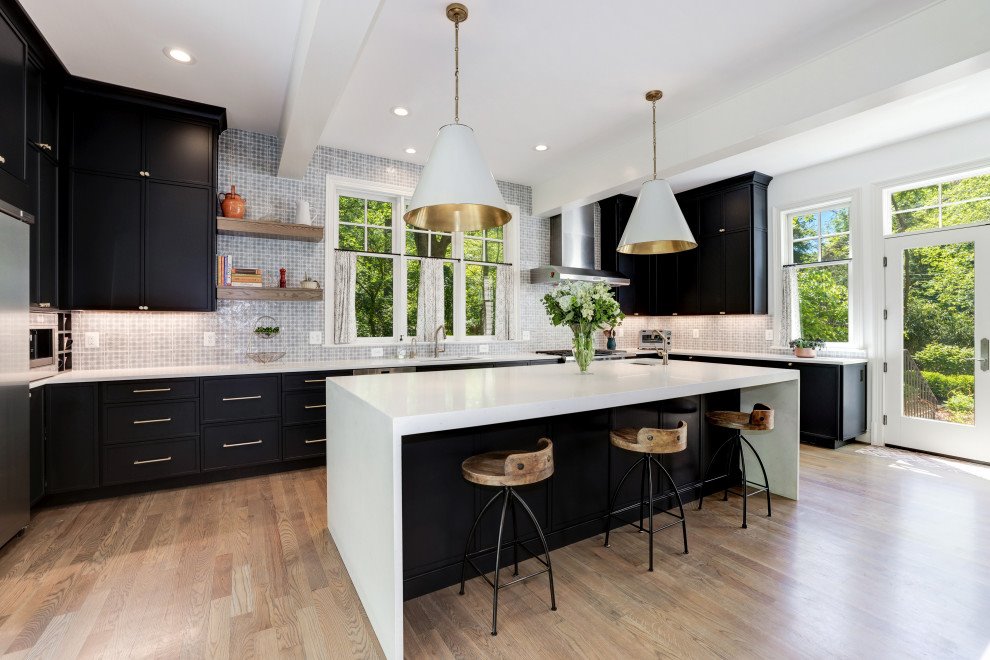
There’s a moment in every home, just before guests arrive, when the kitchen hums with quiet pride. The air smells faintly of coffee and fresh wood. Light glances off a brushed brass handle, slips down the grain of oak, and settles into the cool, shadowed embrace of matte black.
This is where design becomes not mere decoration, but conversation - deep and revealing, harmonious and synchronous.
Blending different kitchen cabinet designs is not a trick. It is a craft. The craft of knowing when to speak in bold strokes and when to whisper in shadows. Imagine what it would look like to have variety, character, and personality in your space. And then, blending it like a silhouette merges in the background, yet stands its ground.
Mixing and matching kitchen cabinet designs is a growing trend that lets homeowners create a space that feels personal, dynamic, and timeless. But it’s also an art. One wrong combination can make your kitchen look chaotic instead of cohesive.
Whether you’re updating your kitchen on a budget or going for a high-end remodel, blending different cabinet styles, colors, and finishes can deliver stunning results—if done right. Dive in to find more.
Why Should You Mix and Match Kitchen Cabinet Designs?
In modern homes, mixed cabinets are becoming a consistent feature in the kitchen. And why not? When done right, they solve several common design challenges.
It Makes Your Kitchen Visually Interesting
A uniform kitchen cabinet design can look elegant, but sometimes, it may lack personality. This is where homeowners with a wider range of tastes and preferences opt for a more nuanced mixture of designs. Why? Because strategic mixing adds layers of visual interest while maintaining sophistication.
It Adds Depth and Dimension
When design becomes monotonous, boring, and uneventful, try zoning out. Just combine different textures and finishes in the right spaces to give your kitchen the personality it deserves. Your kitchen cabinet design does not have to be boring.
It Gives You The Liberty To Have Your Kitchen Your Way
Whether you need a storage-heavy space, or you want your kitchen’s gadgets to be showcased. Whether you prefer minimalistic, futuristic, or traditional style, you can have it all if you decide to go for the right blend that offers a perfect balance between functionality and style.
It Give You The Liberty To Spend At Your Will
Do you love that higher-end island cabinet, but are wary of your budget shooting off the roof? If you are open to ‘mix and match’, you can have your cherished kitchen island, pairing it with budget-friendly options for lesser prominent sections of the kitchen.
It lets you have different functioning zones
Imagine a corner of your space that has the latest gadgets, all done in sleek modern style. Then, there is the centerpiece, which looks royal - regality being written all over.
Yet again, there is a little cozy corner in your kitchen with seating arrangements and a small bar for your guests to hang around. This kind of zoning of mood and space is possible only when homeowners are open to ‘mix and match’ designs
How To Do The Real Blending?
As with everything else in design, mixing and matching has its core principles. Because true kitchen cabinet design begins with a deep, listening kind of attention:
- What do you reach for most often? Where do your hands naturally go when you cook?
- Which corner could be coaxed into being more than it is?
This is design thinking at its purest. The kind that notices you open the same drawer twenty times a day and still fumble for the whisk. It respects how you move through your kitchen. And, so getting the answers to those questions can set the sail in motion.
Architecting The Blend - Where Real Magic Happens and How?
The Golden Proportion - Design Principles To Swear By
Eminent professional designers swear by the fact that the best form of mixing has a golden proportion - 60-30-10. This comes from the classic interior design principle that helps achieve balance through carefully planned proportions.
The lion’s share of the space is reserved for your dominant style (approximately 60%). This should be your primary cabinet style, color, design, and texture. Choose something that you would want to stay for longer, even if other things change a tad here and there. For instance, a neutral shade, a shaker design, a matte finish, etc.
The next in line is the supporting contrast - your secondary element in design, which holds for 30% of the space. Choose something that contrasts and contradicts the primary elements. For instance, a contracting shade (style and texture, too) for the pantry area, upper cabinets, etc.
Finally, your accent pieces account for the remaining 10%. These are your statement makers—maybe a bold color on a few select cabinets, glass fronts, or open shelving. These elements should grab attention without overwhelming the space.
Let’s take a real-world example to demonstrate the golden proportion in action. In a white shaker kitchen (60%), you might add a navy blue island with the same door style (30%), and incorporate open floating shelves in natural wood (10%).
Visual Weight and Balance
Think of your kitchen as a scale that needs to remain balanced. Darker colors, busier textures, and larger elements carry more "visual weight" than lighter, simpler ones.
Balancing Heavy and Light Elements:
Thus:
- If you choose a dark, dramatic island, balance it with lighter wall cabinets
- Busy textures (like raised panel) should be balanced with smoother surfaces
- Large expanses of one style should be broken up with smaller contrasting elements
The Triangle Principle
Arrange your mixed elements in a triangular pattern around the room to create visual flow. If your island is your bold statement piece, echo that element in two other areas—perhaps your pantry and a display cabinet.
Creating Cohesion Through Common Elements
While you're mixing styles, you need unifying elements to prevent chaos. The following can help achieve the harmonious synchronicity in blending various kitchen cabinet designs.
Hardware Consistency
Using the same hardware throughout (or families of hardware) is one of the easiest ways to create cohesion. Brass handles can unify white shakers with natural wood floating shelves.
Color Relationships
Even when mixing colors, they should relate to each other. Use a cohesive color palette with varying shades and tones of your chosen hues.
Proportional Consistency
If your main cabinets have thick frames, avoid pairing them with ultra-thin, modern styles. Keep proportions within the same family.
Bring Your Kitchen To Life
The beauty of blending designs is that the kitchen becomes a living space, not a frozen showroom. Over time, it absorbs you — your mugs, your spices, your gestures.
Different kitchen cabinet designs start to speak the same language simply because they share the same home.
When you blend kitchen cabinet designs like a pro, you’re not just decorating. You’re composing — a score of wood, metal, and space.
And in the quiet hours, when the light slants just right, it will feel as if the kitchen is looking back at you, proud, because you dared to make it entirely your own.
Comments
Pinterest CabinetDIY
Latest Blog Posts
12
Oct
0
RTA Cabinets Just Arrived? What to Check Before You Start Building
Inspect your DIY kitchen cabinets for shipping damage, missing parts, finish defects, and sizing errors before assembly begins....
22
Sep
0
How to Measure Your Kitchen Before Ordering DIY Cabinets
Learn how to measure your kitchen for DIY cabinets, from walls and windows to appliances and plumbing, before placing your order....
21
Sep
0
Slim Shaker or Regular Shaker? Here's What You're Actually Choosing Between
Slim shaker cabinets have narrower rails and a larger center panel. See how they compare with regular shaker on style, hardware, and kitchen size....
16
Sep
0
What Color Walls Go With Yellow Kitchen Cabinets?
What color walls go with yellow kitchen cabinets? Explore stylish color combinations and practical tips for creating a bright, balanced kitchen....
14
Sep
0
How to Keep Brown Kitchen Cabinets Looking Rich (Cleaning & Care Tips)
Keep brown kitchen cabinets looking rich with practical cleaning, stain removal, and maintenance tips that protect the finish and extend cabinet life....











Best Sellers
Information
My Account